
Get Your Sliding Glass Door Closing Properly Again
If your sliding glass door stops before reaching the jamb, catches near the end of its travel, or needs to be lifted to close, TORBRIX can inspect the cause and recommend the right repair.

Sliding Glass Door Won’t Close All the Way? Causes & What to Check
A sliding glass door that won’t close all the way can move toward the closed position but stops before the moving panel fully reaches and seats against the jamb. That is different from a door that reaches the closed position but will not lock.
The most useful diagnostic question is: Where does the moving panel stop, and what is physically preventing the final part of the closing movement?
The answer may involve panel position, roller support, the lower running surface, alignment, physical interference, displaced hardware, or more than one condition acting together.
How the door approaches the jamb often provides better information than simply knowing that it will not close.
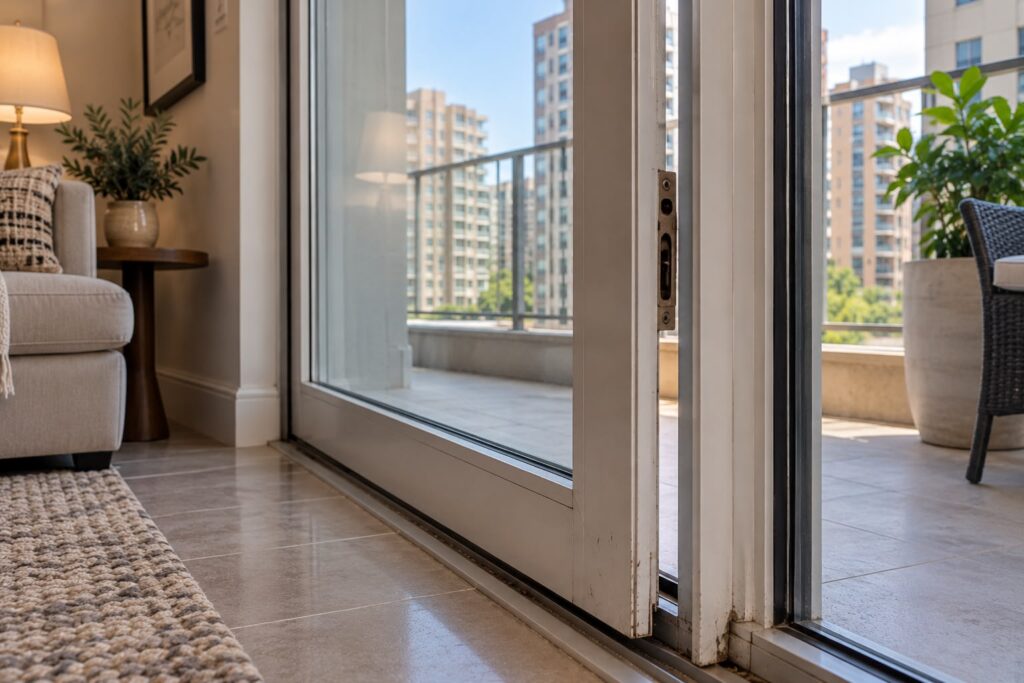
Sliding Glass Door Won’t Close All the Way Is Different From Won’t Lock
A sliding glass door that won’t close all the way never reaches its correct fully closed position.
A door that won’t lock may reach the jamb normally but still have a latch, keeper, handle, or alignment problem that prevents the locking hardware from engaging.
The distinction matters because replacing or adjusting locking hardware will not correct a panel that is physically unable to complete its travel.
Before focusing on the lock, first determine whether the moving panel can reach the position where the lock is supposed to operate.
Where Does the Door Stop?
The stopping point is one of the most useful clues. A door may:
– Stop several inches before the jamb
– Travel almost completely closed and stop during the final inch
– Reach the jamb at the top while leaving a gap near the bottom
– Reach the jamb at the bottom while remaining open near the top
– Stop at the same point every time
– Close farther when the panel is lifted or pushed in a particular direction
– Suddenly refuse to move past a point that was previously normal
Each pattern can point toward a different mechanical condition.
A repeatable stopping point can indicate physical interference or a problem along a specific section of the running path. Uneven contact with the jamb can point more strongly toward panel position or support.
Common Mechanical Reasons a Sliding Glass Door Stops Before Closing
Several conditions can keep the panel from completing the final portion of its travel.
Panel Position or Alignment
The moving panel must remain properly positioned inside the frame while it travels.
If one side sits too high, too low, or at a different angle from the other, the panel may begin contacting the frame before it reaches its intended closed position.
The door may still travel normally through most of the opening and only reveal the problem as it approaches the jamb.
Worn or Uneven Roller Support
Rollers support the weight of the moving panel.
If one roller is worn, seized, damaged, or no longer carrying its share of the load, the panel can sit lower or at an angle.
That change in position may cause the bottom rail, panel edge, or another part of the door to contact the frame before closing is complete.
A door that closes farther when lifted is an important clue that panel support should be inspected.
Lower Running-Surface Problems
A damaged, raised, dented, contaminated, or obstructed section of the lower running surface can interrupt movement.
If the door repeatedly stops at approximately the same location, the track or running surface near that point deserves close inspection.
The rollers should be evaluated at the same time because a failed roller can both create poor movement and contribute to track damage.
Physical Interference
Objects or displaced components can physically block the panel. Possible interference may include debris, damaged weatherstripping, loose hardware, a shifted guide, a damaged threshold component, or another part extending into the door’s path.
The important question is whether something begins making contact precisely where the door stops.
Frame or Jamb Contact
Sometimes the panel reaches part of the jamb before the rest of the panel does. If the top contacts first while the bottom remains away from the jamb, or the reverse occurs, the panel may no longer be sitting squarely within the opening.
That pattern should not automatically be treated as a lock problem. The lock cannot operate normally until the panel reaches the correct closing position.
If One Side Reaches the Jamb Before the Other
Look at the vertical edge of the moving panel as it approaches the jamb. Ideally, the panel and jamb should approach one another in a consistent relationship.
If the gap narrows noticeably at the top but remains wider at the bottom, or vice versa, the panel may be tilted. That can result from roller adjustment, uneven roller wear, loss of support, or another condition affecting panel position.
Adjustment may correct the position when the supporting components remain serviceable. It should not be used simply to compensate for a failed roller or damaged running surface.
If It Stops at the Same Point Every Time
A highly repeatable stopping point deserves attention. Look for:
– A dent or raised area along the running path
– Dirt or debris lodged at that location
– A damaged section of track
– A loose or displaced component
– Weatherstripping or trim entering the panel path
– A roller that reacts differently as it reaches that section
The fact that the resistance occurs in one location can be more useful diagnostically than the amount of force required to move the door.
If the Problem Appeared Suddenly
A door that suddenly stops closing fully should be checked for a new obstruction or mechanical change. Something may have shifted, loosened, broken, or entered the running path.
A roller may have failed abruptly. Hardware may have moved. Debris may be lodged where the panel travels. Avoid repeatedly forcing the panel against a new hard stop. Doing so can transfer damage to the roller, track, handle, lock, or frame.
If It Became Worse Gradually
Gradual loss of closing travel can suggest wear developing over time. You may notice that:
– The door became progressively heavier
– One side began sitting lower
– Scraping developed near the bottom
– The panel needed to be lifted to close
– The final gap at the jamb gradually increased
– Locking became more difficult after the closing problem began
This pattern can indicate deterioration in the rollers, support, adjustment, running surface, or several related components. The earlier symptoms can help identify which condition developed first.
Why Forcing the Door Closed Can Create More Damage
When a sliding glass door stops before reaching the jamb, additional force does not identify or correct the cause. Forcing the handle can place unnecessary stress on the handle and locking hardware.
If the panel is sitting low, pushing harder may increase contact against the lower frame or running surface. If an obstruction is present, force can damage both the interfering component and the panel.
A door that repeatedly needs to be lifted, slammed, pushed sideways, or forced into the jamb should be inspected instead of treated as normal operation.
What a Technician Should Inspect
Diagnosis should follow the movement of the entire panel rather than starting with a predetermined replacement part. Useful inspection points include:
– Where the panel stops
– Whether the stopping point is repeatable
– Whether the panel is level and properly supported
– Roller condition and movement
– Panel height and adjustment
– Condition of the lower running surface
– Bottom and side clearances
– Contact with the frame or jamb
– Weatherstripping and guides
– Loose or displaced hardware
– Whether lifting or changing pressure allows additional travel
– Latch and keeper position after the panel reaches the correct closing position
The objective is to identify what prevents the final movement, not simply which component is closest to the symptom.
When Sliding Glass Door Repair May Be Needed
When a sliding glass door won’t close all the way, professional repair may be appropriate if the panel repeatedly stops before the jamb, cannot close without being lifted or forced, or shows evidence of roller, track, alignment, or hardware problems. Depending on the cause, repair may involve:
– Correcting panel alignment or adjustment
– Replacing worn or damaged rollers
– Repairing a damaged running surface
– Removing or correcting physical interference
– Repositioning displaced components
– Correcting locking hardware after the panel position has been restored
The repair should address the mechanical cause of the incomplete closing rather than forcing the door into position.
FAQs
Common questions about sliding glass doors that won't close all the way, including panel position, rollers, track condition, alignment, interference, and when professional repair may be needed.
Need another answer? Contact usWhy won’t my sliding glass door close all the way?
Possible causes include incorrect panel position, worn or uneven rollers, track or running-surface damage, physical interference, displaced hardware, or several conditions occurring together. Where the panel stops provides an important diagnostic clue.
Why will my sliding door close if I lift it?
Lifting the panel changes its position and clearance. If that allows the door to travel farther, the rollers, roller adjustment, panel support, and lower clearances should be inspected.
Why does my sliding door stop at the same point every time?
A consistent stopping point can indicate a problem at that section of the running path, such as track damage, debris, interference, or a component contacting the panel.
Why does the top of my sliding door close before the bottom?
The panel may be sitting at an angle rather than squarely within the frame. Roller support, adjustment, alignment, and panel position should be checked before treating the problem as a lock failure.
Is this the same as a sliding glass door that won’t lock?
No. A door that won’t close all the way cannot physically reach its proper closed position. A door that won’t lock may reach the jamb normally but have a separate latch, keeper, alignment, or hardware problem.
Can worn rollers keep a sliding glass door from closing completely?
Yes. A worn, damaged, seized, or uneven roller can change the height or angle of the moving panel. That can cause the panel to contact the frame or another surface before it completes its closing travel.
Need Help With a Sliding Glass Door That Won’t Close All the Way?
If your sliding glass door stops before reaching the jamb, needs to be lifted to close, or repeatedly catches near the end of its travel, TORBRIX can inspect the panel, rollers, running surface, alignment, and related hardware to identify the cause.