
Keep Your Sliding Glass Door Moving Safely on Truck
If your sliding glass door keeps coming off track, shifting, or feeling unstable, TORBRIX can diagnose the cause and recommend the right repair.

Sliding Glass Door Keeps Coming Off Track?
Causes & What to Check
A sliding glass door that keeps coming off track is usually showing a repeated problem with how the panel is being supported, positioned, or guided as it moves. The important word is keeps.
A door that has come out of position once after an impact or unusual event is different from a panel that repeatedly drops, shifts, tilts, or loses its supported position during normal use.
What Does “Coming Off Track” Actually Mean?
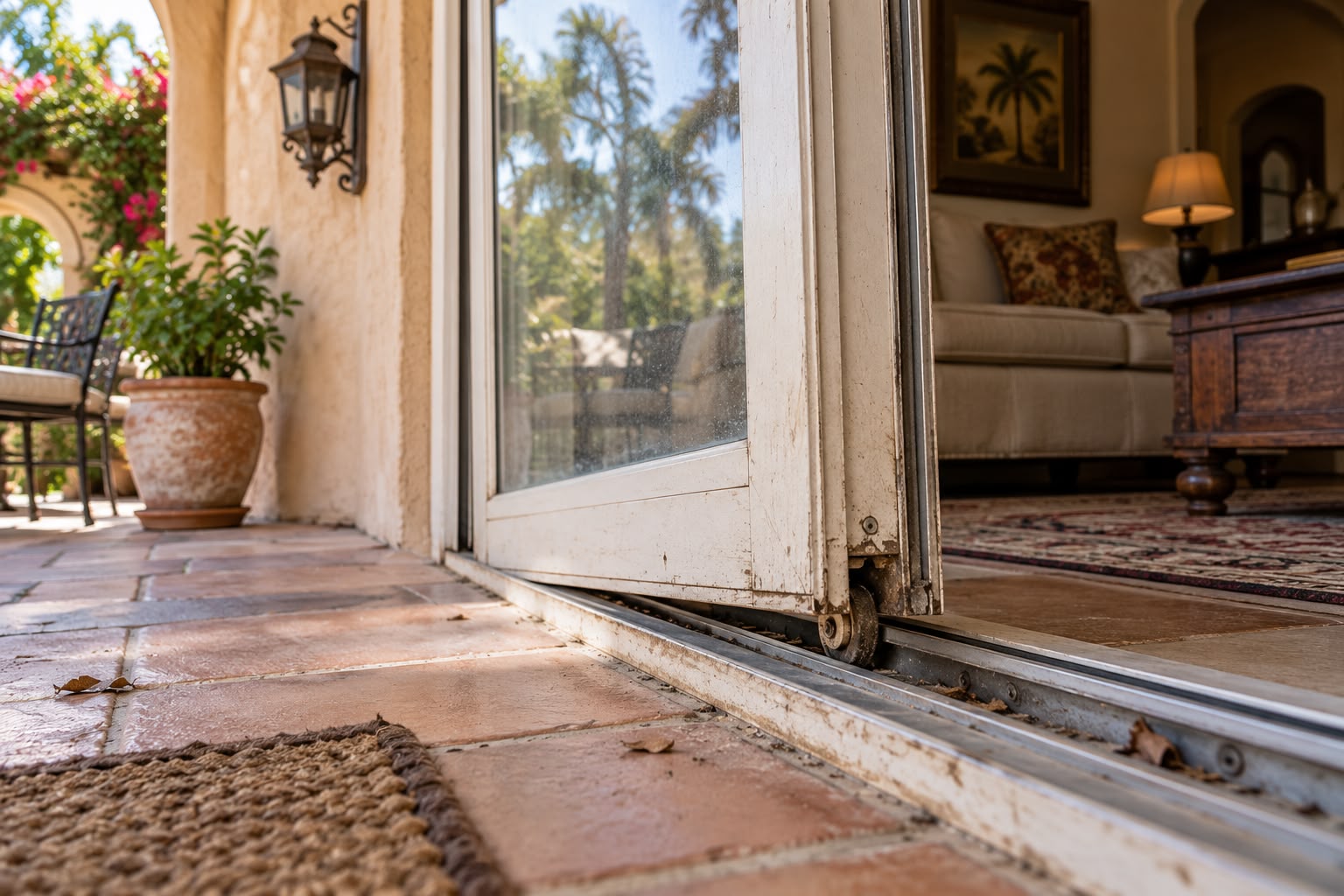
People often use “off track” to describe several different conditions. The panel may lean or tilt. One side may drop lower than the other. A roller may stop traveling correctly on the lower running surface. The door may bind and then shift suddenly, or the panel may feel unstable as it moves.
These symptoms can feel similar, but they do not necessarily have the same cause. The first step is determining what part of the panel is losing its normal supported or guided position and when that happens during travel.
Worn or Damaged Rollers Can Affect Panel Support
The rollers at the bottom of the sliding panel help support its weight and allow it to travel along the lower running surface. If a roller is worn, damaged, seized, loose, or no longer supporting the panel correctly, one side of the door may sit differently from the other. That can change the panel’s height and angle as it moves.
In some cases, the door may continue to operate for a while but feel increasingly unstable. Eventually, the panel may bind, tilt, or repeatedly lose its proper position. When roller condition is contributing to the problem, Sliding Glass Door Roller Replacement may be part of the appropriate repair.
Adjustment and Panel Position Matter
Roller adjustment affects more than how easily the door slides. It also affects the height and position of the panel inside the frame. If the panel sits too low, too high, or unevenly from side to side, the relationship between the rollers, lower running surface, and upper portion of the frame can change.
A door that appears to be “jumping the track” may therefore have an adjustment or panel-position problem rather than a damaged track. This is why simply putting the panel back into place may not provide a lasting correction.
The Running Surface Should Be Checked
The lower running surface guides the rollers as the panel moves. If that surface is bent, worn, damaged, deformed, or obstructed, a roller may not travel through it normally.
Pay attention to whether the problem happens at the same location each time. If the panel repeatedly shifts, catches, or loses support at one specific point in its travel, the condition of the running surface in that area deserves closer inspection. If inspection confirms damage to the running surface itself, Sliding Glass Door Track Repair may be the appropriate repair path.
Panel Clearance Can Affect Stability
A sliding panel needs the correct relationship between its lower support and the upper portion of the frame. If the panel sits too low, excessive clearance may develop at the top. If it sits too high, the panel may bind or fail to move normally.
The upper guidance and retention of the panel should therefore be considered along with the rollers and lower running surface. The exact construction varies between sliding door systems, so the goal is not to assume one specific component has failed. The goal is to determine whether the panel is being properly supported and guided throughout its travel.
Why Putting the Door Back on Track May Not Fix It
Repositioning the panel can make the door operate normally again temporarily. But if the condition that allowed the panel to lose its position is still present, the problem may return.
For example, resetting the panel does not correct a damaged roller, improper adjustment, a damaged running surface, or a clearance problem. If the door repeatedly comes out of position after being reset, the repeated failure itself is useful diagnostic information.
Did the Problem Start Suddenly or Gradually?
How the problem developed can provide another clue.
A door that suddenly came out of position after being struck, forced, or lifted may need to be evaluated differently from a door that gradually became harder to move or increasingly unstable over time.
Gradual changes may point toward wear, changing roller support, adjustment, or progressive damage. A sudden change may suggest that something shifted, broke, or was physically disturbed. Neither pattern identifies the repair by itself, but the history helps narrow the inspection.
Does the Door Feel Loose or Unstable?
A sliding panel should feel supported as it travels. If the panel rocks, tilts, shifts noticeably, or feels as though it can move in directions it normally should not, that instability should be inspected.
The condition may involve lower roller support, panel height, adjustment, upper guidance, or the relationship between the panel and frame. Continuing to operate an unstable panel can place additional stress on rollers, hardware, and running surfaces.
Upper Guidance and Retention Should Also Be Considered
The lower rollers support much of the panel’s weight, but the upper portion of the frame also helps maintain the panel’s position as it moves. If the relationship between the panel height and upper guidance is incorrect, the panel may have more movement or clearance than intended.
This does not mean every door that comes off track has an upper-frame problem. It means the complete panel-to-frame relationship should be checked rather than focusing only on the lower track.
Repeated Problems After Previous Adjustment or Repair
If the door has already been adjusted, repositioned, or repaired but continues to come off track, that is important information.
Repeated adjustment without identifying the underlying cause can temporarily change the panel position without correcting worn rollers, damaged running surfaces, improper clearance, or another mechanical problem. A recurring condition deserves a complete inspection rather than another automatic reset.
Coming Off Track Is Different From Being Stuck or Hard to Open
These symptoms can overlap, but they should not automatically be treated as the same problem.
A sliding glass door that is hard to open may still remain correctly supported and guided while resistance increases.
A stuck sliding glass door may stop moving entirely or jam at a particular location.
A door that keeps coming off track involves repeated loss of the panel’s normal supported or guided position.
Keeping those symptom patterns separate helps identify the appropriate repair instead of assuming every movement problem has the same cause.
How TORBRIX Diagnoses a Sliding Glass Door That Keeps Coming Off Track
TORBRIX evaluates why the panel is losing its supported position before recommending a repair.
That includes checking:
- Roller condition and support
- Roller adjustment and panel height
- Whether the panel sits level inside the frame
- The condition of the lower running surface
- Whether the problem occurs at a specific point in travel
- Panel clearance and stability
- Upper guidance and retention
- Signs of physical damage or interference
- Whether previous adjustment or repositioning provided only temporary improvement
The repair should match the cause.
A roller problem may require roller work. A panel-position problem may require proper adjustment. Damage to the running surface may require track repair. Other conditions may require correcting the part of the system that is allowing the panel to lose its normal position.
FAQs
Common questions about sliding glass doors that keep coming off track, including latch and keeper alignment, panel position, rollers, panel position, adjustment, track condition, and stability.
Need another answer? Contact usWhy does my sliding glass door keep coming off track?
A sliding glass door may repeatedly come off track when the panel is not being properly supported or guided. Worn rollers, improper adjustment, panel position, running-surface damage, clearance, or other mechanical conditions may contribute.
Can bad rollers cause a sliding glass door to come off track?
Yes. Worn, damaged, loose, or seized rollers can affect how the panel is supported and positioned as it moves. If one side loses proper support, the panel may tilt, bind, or become unstable.
Why does the problem return after I put the door back on track?
Putting the panel back into position does not necessarily correct the condition that caused it to come out. If roller wear, adjustment, damage, or improper clearance remains, the problem can return.
Does a sliding glass door that keeps coming off track need new rollers?
Not automatically. Rollers are one possible cause, but the panel position, adjustment, running surface, clearance, and guidance should also be inspected before deciding what needs to be replaced.
Can a damaged track cause the door to keep coming off?
It can. A bent, worn, or damaged running surface may interfere with normal roller travel. However, repeated off-track problems can also come from roller support, adjustment, panel position, or other conditions, so track damage should be confirmed rather than assumed.
Can adjusting the rollers stop the door from coming off track?
It may help when incorrect roller adjustment is affecting panel height or position. If the rollers are damaged or another part of the door is causing the instability, adjustment alone may not provide a lasting correction.
Is it safe to keep using a sliding door that repeatedly comes off track?
A panel that repeatedly loses its supported position should be inspected. Continued operation can place additional stress on the rollers, hardware, running surfaces, and other parts of the door.
Can TORBRIX repair a sliding glass door that keeps coming off track?
Yes. TORBRIX can inspect the rollers, panel position, adjustment, running surface, clearance, and related components to determine why the door keeps coming off track and what repair is appropriate.
Sliding Glass Door Keeps Coming Off Track? TORBRIX Can Help
If your sliding glass door repeatedly comes off track, tilts, shifts, or feels unstable during operation, TORBRIX can inspect the door and determine what is allowing the panel to lose its proper position.