
Sliding Glass Door Alignment Service in South Florida
A sliding glass door should not be adjusted simply to make it look level. The underlying condition of the rollers, track, panel support, and locking position should be considered before the adjustment is made.
TORBRIX takes a repair-first approach. We check how the panel sits and moves through the opening, determine whether adjustment is appropriate, and look for mechanical conditions that could be causing the alignment problem.
Our goal is to correct the cause of the problem, not simply make a temporary adjustment that hides worn rollers, track damage, or another issue.
When alignment is the appropriate repair, we adjust the panel and verify its movement, clearance, jamb contact, and lock position before the work is complete.
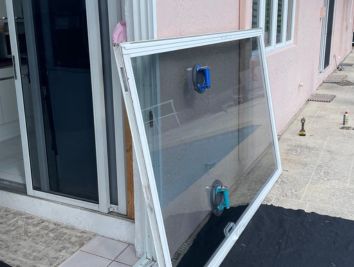
Proper Panel Alignment
Adjust the panel height and angle so the door sits correctly within the frame
Correct Bottom Clearance
Restore proper clearance to help prevent unwanted rubbing or contact along the lower frame
Jamb & Lock Alignment
Position the panel so it meets the jamb evenly and the latch lines up correctly with the keeper
Signs the Panel May Be Out of Alignment
Alignment problems usually show up in the relationship between the moving panel and the frame. Useful observations include:
- One side of the panel sitting visibly lower
- A larger gap at the top or bottom of the jamb
- The panel appearing tilted as it approaches the closed position
- The lower rail contacting the track or frame
- The latch sitting above or below the keeper
- The door locking only when the panel is lifted or pushed
- The panel meeting the jamb at an angle instead of evenly
- The panel changing angle as it moves
Need Door Alignment?
Tell us what's happening with your door and we'll get back to you

Sliding Glass Door Alignment & Adjustment
Sliding glass door alignment is about the position of the moving panel inside the frame: its height, angle, bottom clearance, and how the leading edge meets the jamb when the door closes.
A panel can be out of position even when it still slides. One side may sit lower. The gap at the jamb may be uneven. The lower rail may contact the frame. The latch may arrive above or below the keeper.
The key question is not simply whether the door looks crooked.
It is whether the panel is being supported and positioned correctly through the full opening.
On many roller-supported doors, panel height can be changed through the roller adjustments. That can correct an alignment problem when the rollers are still serviceable and the panel is otherwise traveling correctly.
But adjustment should not be used to compensate for a failed roller, damaged running surface, or another mechanical problem.
A properly aligned door should not merely look level when closed. It should travel correctly, maintain appropriate clearance, meet the jamb properly, and allow the hardware to line up as intended.
Why Sliding Glass Door Position Changes
On common roller-supported systems, the moving panel is carried near the bottom by roller assemblies. The height of those rollers affects where the panel sits inside the frame.
If one side is supporting the panel at a different height from the other, the panel angle changes.
That can happen because an adjustment has shifted, because a previous adjustment was incorrect, or because wear in one roller assembly has changed how that side supports the door.
Track irregularities can also influence how the panel sits as it moves. If the panel looks level in one part of the opening but changes angle or resistance at a particular location, the issue may not be a simple height adjustment.
The position of the panel should therefore be judged while the door is moving, not only after it reaches the jamb.
Why Choose TORBRIX?
A sliding glass door that sits unevenly does not always need a simple adjustment. The underlying cause may involve roller support, panel position, track condition, or another mechanical issue.
Diagnose Before Adjusting
We inspect how the door sits, moves, and meets the frame before making adjustments.
Fix the Cause, Not Just the Position
If worn rollers, track damage, or another issue is affecting the door’s position, we identify it instead of relying on adjustment alone.
Precise Alignment & Adjustment
When adjustment is appropriate, we focus on proper panel height, clearance, and positioning so the door can move, close, and line up correctly.
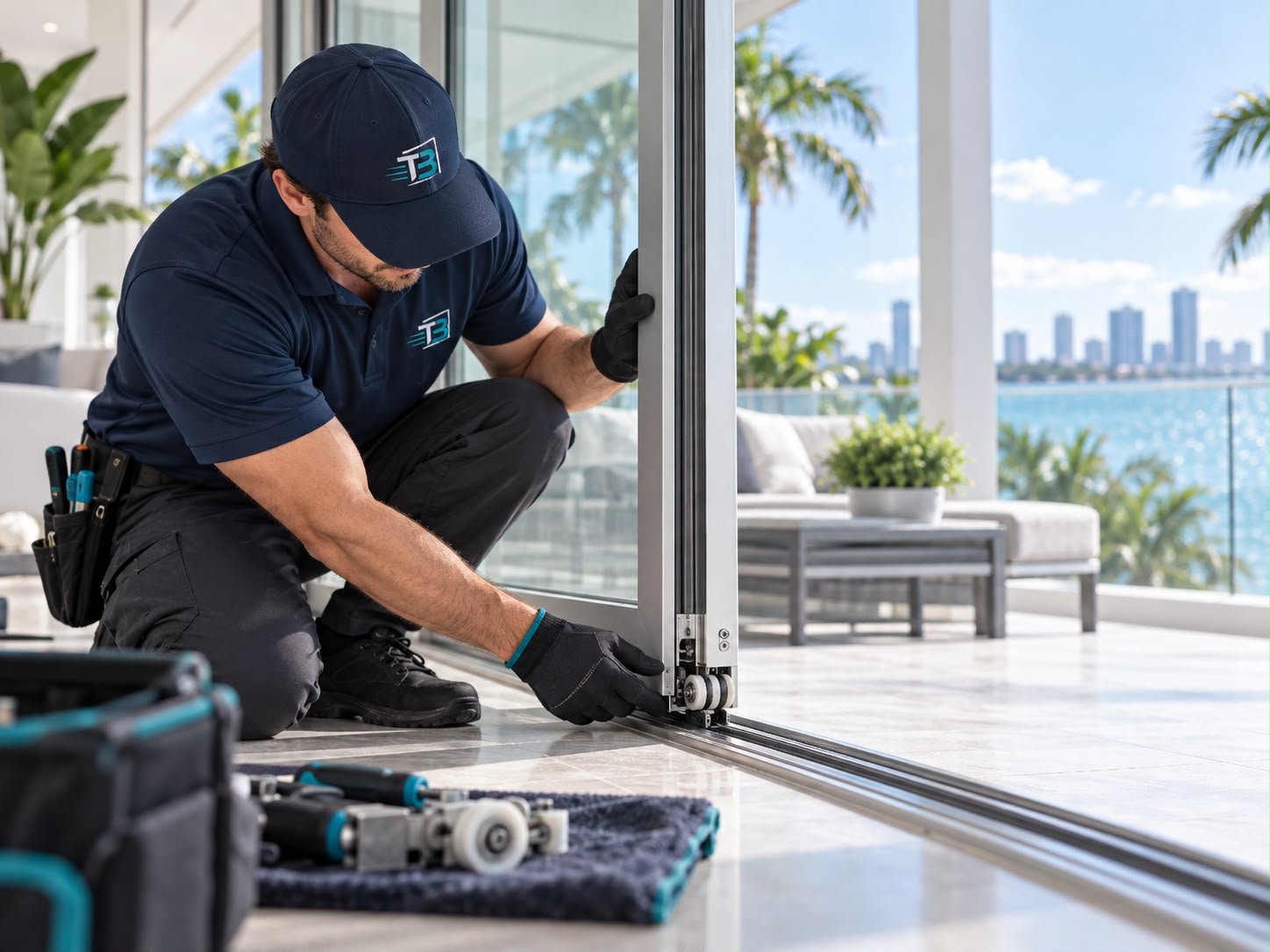
How Alignment Affects Closing and Locking
Panel position has a direct effect on how the leading edge reaches the jamb.
If the panel sits low on one side, it may meet the frame at an angle. One part of the edge can make contact before the rest of the panel reaches its normal closed position.
That can create a closing complaint even when nothing is blocking the opening.
The same geometry affects the lock.
The latch and keeper are designed to meet at a particular height and position. If the panel drops, rises, or tilts, the latch may no longer enter the keeper correctly.
A door that locks only when it is lifted is a useful clue that panel position may be involved.
It does not prove that the lock hardware is good.
If the panel reaches the correct position but the latch, mortise, handle, or keeper still does not function properly, Sliding Glass Door Lock Repair addresses the hardware side of the problem. The symptom-focused Sliding Glass Door Won’t Lock page goes deeper into why a door may close but still fail to latch.
If the main issue is that the panel cannot reach the jamb at all, Sliding Glass Door Won’t Close covers that diagnostic question separately.
Alignment, Roller Wear, and Track Problems Are Not the Same Repair
A panel can look misaligned because its support has changed. That does not always mean the adjustment itself is wrong.
If a roller assembly is mechanically worn, seized, damaged, or unable to carry the panel consistently, changing the roller height does not restore that component. The panel may move to a better position temporarily while the failed roller remains the real problem.
That is where Sliding Glass Door Roller Replacement becomes different from alignment service.
Track problems create a different pattern. If the panel repeatedly rises, drops, catches, or changes resistance at the same point in travel, the running surface deserves attention. A localized damaged area can affect the panel as the roller passes over it. Adjustment cannot remove a defect in the track.
If inspection confirms damage to the running surface, Sliding Glass Door Track Repair is the more relevant service.
The important diagnostic question is whether the panel position is wrong everywhere or whether the door changes behavior at a specific place as it travels.
Misaligned Does Not Mean Off Track
A door can sit crooked and still have its rollers traveling on their intended running surface. That is a misalignment issue. An off-track condition is different. It involves a panel or roller that is no longer traveling or supporting the door in its intended position. Raising or lowering the panel should not be used as a shortcut for identifying why a door is displaced. If the panel appears to have shifted out of its normal travel path, Sliding Glass Door Off Track addresses that condition separately.
Bottom Clearance and Physical Dragging
A panel that sits too low may physically contact the lower frame or track.
If the rollers are serviceable and the problem is simply insufficient height, adjustment may restore the necessary clearance.
But bottom contact should be observed carefully.
If only one corner drags, panel angle may be involved. If the contact changes at a particular point in travel, the running surface may be affecting the door.
If the panel cannot maintain its adjusted height, roller condition becomes more important.
Sliding Glass Door Dragging on Bottom focuses specifically on physical contact and the causes behind it.
For alignment work, the goal is not simply to make the scraping disappear. The panel still has to sit correctly and travel correctly after the clearance is changed.
What TORBRIX Checks Before Adjusting the Door
The first check is how the panel sits inside the frame. We look at the top and bottom clearances, the angle of the leading edge, and the gap where the panel meets the jamb.
Then the door is moved through the full opening. That shows whether the panel maintains its position or whether the angle, resistance, or clearance changes as it travels.
The roller response matters as well. If one side adjusts normally and holds its position while the other side does not, that can point away from a simple alignment correction.
At the closed position, we check how the panel meets the jamb and where the latch lands relative to the keeper.
We also watch for physical contact at the bottom and for movement changes that repeat at the same location.
Those observations help answer the central question: is the panel incorrectly positioned, or is another mechanical problem creating the appearance of misalignment?
When Sliding Glass Door Adjustment Is Appropriate
Adjustment is most appropriate when the panel is being supported by serviceable components but is sitting at the wrong height or angle.
In that situation, changing the roller height can restore the relationship between the panel, lower clearance, jamb, and lock position.
The adjustment should then be verified through the entire opening.
The door should maintain its position, avoid unwanted contact, approach the jamb evenly, and allow the closing hardware to meet correctly.
A naturally heavy panel is not automatically out of alignment. Larger or older glass panels may require more effort while still being properly positioned.
Alignment corrects geometry. It is not intended to make every door feel light.
We provide sliding glass door lock and handle repair throughout Broward, Miami-Dade, and Palm Beach counties.
When Adjustment Is Not Enough
Adjustment has limits. It is not a repair for a roller assembly that can no longer support the panel correctly. It does not repair a damaged running surface. It does not fix broken lock hardware. And it should not be used to force a displaced or mechanically compromised panel into an acceptable-looking position.
If the panel cannot remain correctly supported after adjustment, or if its behavior changes because of another component, that component needs to be addressed.
When the issue goes beyond alignment, TORBRIX can address the underlying problem through our broader Sliding Glass Door Repair service.
Door Sitting Uneven or Not Closing Correctly?
Contact TORBRIX to schedule a sliding glass door alignment and adjustment inspection in South Florida.