Expert Sliding Glass Door Repair in Hollywood FL
If your sliding glass door is heavy, dragging, noisy, misaligned, or difficult to lock, TORBRIX can diagnose the cause and recommend the right repair.

Sliding Glass Door Repair Hollywood, FL
trusted local
A sliding glass door can still move and still have a developing repair problem.
The panel may feel heavier than it used to. It may hesitate at one point in the opening, scrape near the bottom, make noise as it travels, or reach the closed position without lining up correctly with the lock.
TORBRIX provides sliding glass door repair in Hollywood, FL, for patio and balcony doors that have become difficult to open, rough, noisy, misaligned, or difficult to secure.
Instead of assuming every heavy door needs the same repair, we look at how the entire door system is operating. The position of the panel, the condition of the rollers and track, and the way the door meets the frame when closed can all help identify where the problem begins.
A door that feels heavy may have worn rollers. A door that catches in one location may have track damage. A door that closes but will not lock may be sitting slightly out of position.
The repair should match the actual cause.
If your sliding door in Hollywood is becoming harder to operate, call TORBRIX at (954) 337-1466 to request an inspection and repair estimate.
Why Choose TORBRIX?
TORBRIX focuses specifically on sliding glass door repair and the components that affect how the door moves, closes, and locks.
Our approach is based on inspection rather than assuming the same repair applies to every heavy or difficult door.
When you contact TORBRIX, you can expect:
- Evaluation of the complete sliding door system
- Repair recommendations based on the actual condition
- Roller, track, alignment, lock, and handle repair options
- A repair-first approach when the existing door can be restored
- Attention to how one component may affect another
- Service for sliding glass doors throughout Hollywood and surrounding South Florida service areas
The objective is straightforward: identify what is interfering with the door’s operation and correct the problem that is actually present.
Sliding Door Conditions That Can Affect Hollywood Properties
Sliding glass doors are used in many types of Hollywood properties, including single-family homes, condominiums, apartments, townhomes, and properties with doors opening toward patios, balconies, yards, and pool areas.
The way those doors wear can vary.
A heavily used patio door may gradually develop roller wear. A larger or heavier panel may become noticeably harder to move when its supporting components deteriorate. Older hardware may no longer hold adjustment as consistently as it once did.
In coastal and near-coastal areas, moisture and airborne salt may also contribute to corrosion on exposed metal components over time. Dirt, sand, and debris can collect along the lower track and make an existing mechanical problem more noticeable.
None of these conditions automatically determines the repair.
The important question is still how the individual door is sitting and moving at the time it is inspected.
What Changes in Door Movement Can Tell You
How a sliding glass door moves often provides useful information about what needs attention.
A door that is difficult from one end of the opening to the other behaves differently from a door that rolls normally and then hits resistance in the same location every time.
Watch for changes such as:
- The panel takes more effort to start moving
- The door becomes rough midway through its travel
- One side of the panel appears lower
- The bottom edge begins scraping
- Grinding or vibration develops while sliding
- The door catches repeatedly in one section of the track
- The panel must be lifted slightly to move
- The door reaches the frame but does not line up with the latch
- The handle feels loose because extra force is being used
These observations do not replace an inspection, but they help distinguish between different types of problems.
For example, consistent resistance may point toward roller wear or panel support issues, while a repeated bump at one location may indicate a problem along the track.
Why a Sliding Door Should Not Need to Be Forced
Once a sliding glass door becomes difficult to move, applying more force can place unnecessary stress on other parts of the system.
Pulling harder on the handle does not correct a worn roller.
Lifting the panel every time it is opened does not repair its support.
Repeatedly forcing a dragging door can increase contact between the panel, rollers, and track and may also place additional strain on the handle and locking hardware.
A door that suddenly becomes much heavier, starts scraping, or needs to be lifted to move should be checked before the condition becomes more severe.
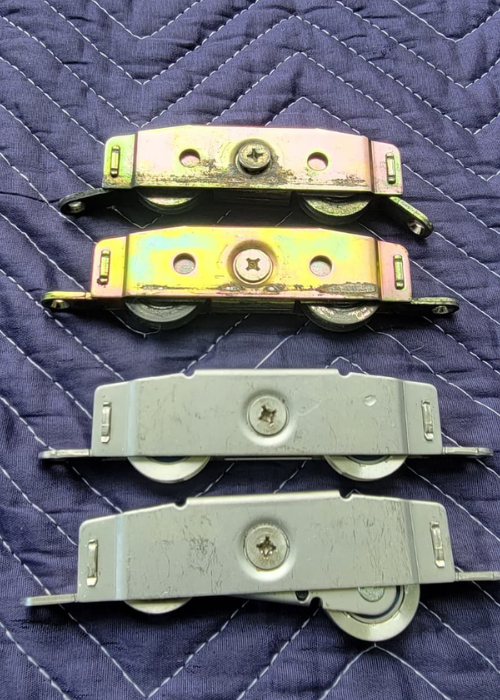
Roller Replacement
Worn or damaged rollers can make a sliding glass door feel unusually heavy or allow the panel to sit unevenly.
TORBRIX evaluates roller condition together with panel position and track condition before recommending sliding glass door roller replacement.
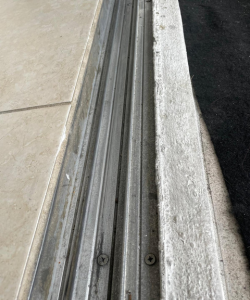
Track Repair
Damage along the lower track can create a repeated bump, catch, vibration, or scraping sensation as the panel moves.
Because roller and track wear can affect one another, both should be evaluated before deciding what sliding door track repair is appropriate.
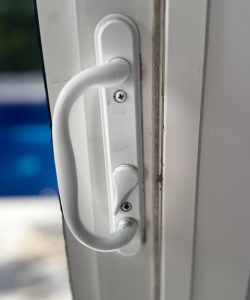
Lock and Handle Repair
A lock problem is not always caused by the lock itself.
If the panel has shifted, the latch may no longer meet the receiver correctly. TORBRIX checks panel position along with the hardware before recommending sliding door lock and handle repair.
Alignment and Adjustment
A panel that no longer sits correctly may drag, show uneven gaps, or fail to meet the frame properly when closed.
Sliding door alignment and adjustment may restore the correct panel position when the supporting components remain serviceable.
One Symptom Can Involve More Than One Component
Sliding doors operate as connected systems.
The rollers support the panel, the track provides the running surface, alignment determines where the panel sits, and the lock depends on the door reaching the correct closing position.
Because those parts interact, one mechanical problem can create several symptoms.
For example, a worn roller may allow the panel to sit lower. That position can lead to scraping, increase wear along the running surface, and change how the latch meets the frame.
That is why the repair should address the source of the problem rather than treating each symptom as an unrelated failure.
Repair First, Instead of Guessing at Replacement
A difficult sliding door does not automatically mean the entire door system needs replacement.
When the frame and glass remain serviceable, correcting the rollers, track, alignment, lock, handle, or related hardware may restore the existing door without replacing the complete assembly.
TORBRIX evaluates the condition first and focuses on repairing the components responsible for the problem when practical.

How TORBRIX Evaluates a Sliding Glass Door?
The inspection starts with the way the door behaves as a complete system. We may check:
This approach helps avoid replacing a part simply because it is commonly associated with the symptom.
The goal is to determine what is actually preventing the door from moving, closing, or locking the way it should.
Request Sliding Glass Door Repair in Hollywood, FL
A sliding glass door should move without excessive force and reach the closed position correctly.
If your door has become heavy, rough, noisy, misaligned, difficult to close, or difficult to lock, TORBRIX can inspect the system and determine which components need attention.
Call (954) 337-1466 to request sliding glass door repair in Hollywood, FL, or submit a service request online.
FAQs
Common questions about sliding glass door repair in Hollywood FL, including hard-to-open doors, rollers, track problems, alignment, locking issues, and coastal wear.
Need another answer? Contact us.
Why is my sliding glass door getting harder to open?
Possible causes include worn rollers, damaged track surfaces, poor panel alignment, debris, or more than one condition occurring at the same time. The way resistance appears during the door’s travel can help determine what should be inspected.
Why does my sliding door catch in the same spot?
A repeated catch in one location can be associated with a damaged or irregular section of track, debris, or a roller that is not traveling properly. The specific area should be inspected rather than assuming the entire track is damaged.
Can worn rollers affect the track?
Yes. A roller that no longer turns or supports the panel correctly can increase contact with the track. Over time, that additional contact may contribute to wear.
Why does my sliding glass door close but not lock?
The locking hardware may be damaged, but the panel may also be sitting too high, too low, or too far from the correct latch position. Checking alignment and panel position helps determine whether the lock itself is the source of the problem.
Does every damaged sliding door track need replacement?
No. The appropriate repair depends on the material, location, and extent of the damage. Roller condition and panel alignment should also be considered before deciding what work is necessary.
Can salt and humidity affect sliding door hardware in Hollywood?
Moisture and airborne salt can contribute to corrosion on exposed metal components, particularly closer to coastal environments. The effect varies by door, exposure, hardware type, maintenance, and age, so the actual condition still needs to be inspected.
Should I use oil or WD-40 on a heavy sliding glass door?
Oil or grease is not a reliable solution for a door that has become mechanically difficult to move. Oily products can collect dirt, sand, and debris along the track while temporarily masking roller, track, or alignment problems.