
Stop Your Sliding Glass Door From Dragging
If your sliding glass door is scraping or dragging along the bottom, TORBRIX can diagnose the cause and recommend the right repair.

Sliding Glass Door Dragging on Bottom? Causes & What to Check
A sliding glass door dragging on bottom is making physical contact somewhere along the lower part of the opening as the panel moves.
You may hear scraping, feel resistance through the handle, or notice that the door becomes harder to move at certain points.
The important distinction is contact.
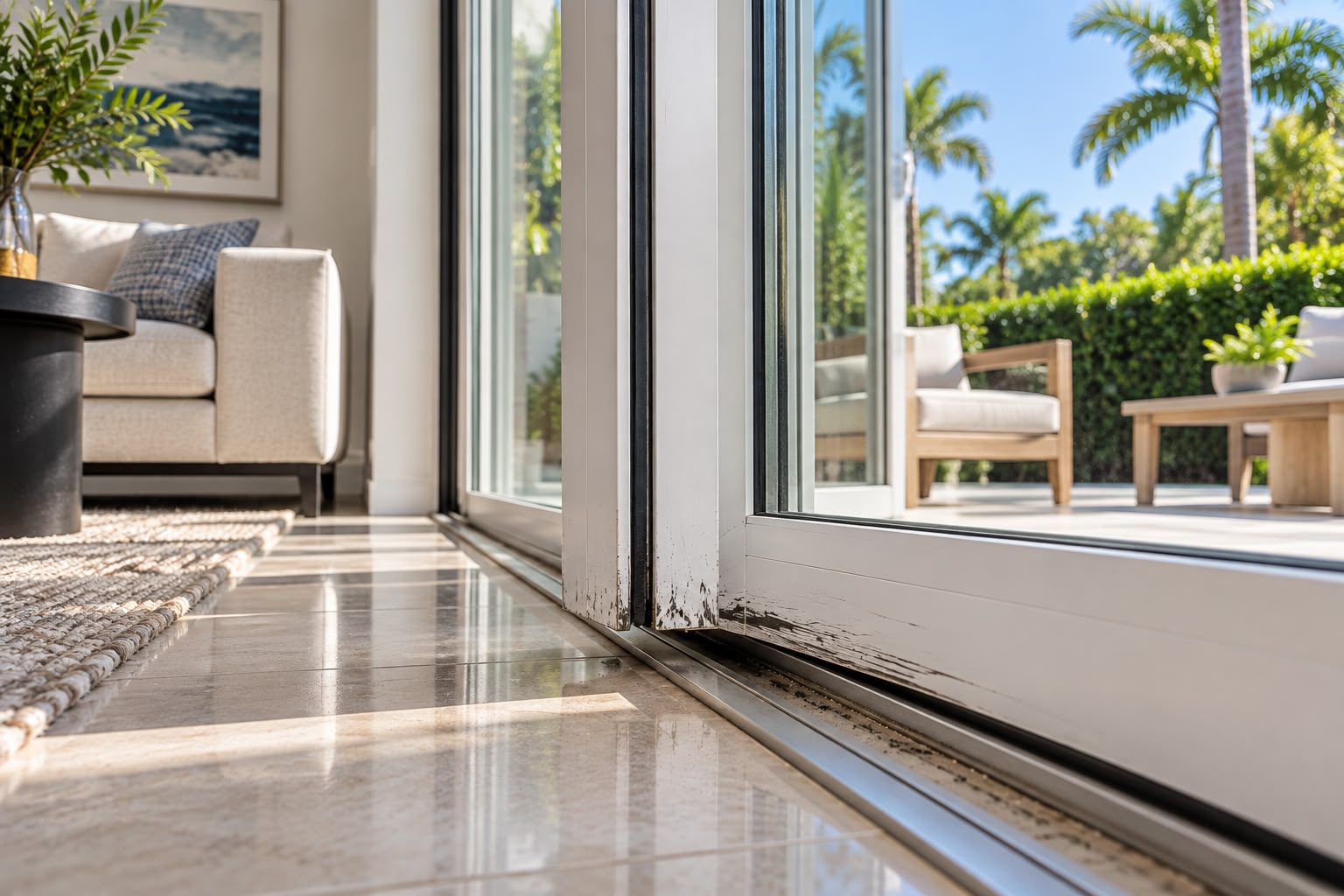
What Does Bottom Dragging Feel or Sound Like?
Bottom dragging does not always feel the same.
Some doors produce a light scraping sound through most of their travel. Others move normally until they reach one particular area and then suddenly rub or catch.
You may notice:
- Scraping or grinding from the bottom of the door
- Increased resistance while sliding
- The panel rubbing at one specific point
- One side of the panel sitting lower than the other
- The door becoming harder to move over time
- Visible marks along the lower portion of the panel or track
- The door moving more easily when the panel is slightly lifted
The location and pattern of the dragging can provide useful clues about what should be inspected.
Worn Rollers Can Allow the Panel to Sit Too Low
The rollers beneath the sliding panel support its weight and maintain its position above the lower running surface. As rollers wear, become damaged, seize, or lose proper adjustment, the panel may begin to sit lower than intended.
Even a relatively small change in height can reduce the clearance beneath the panel enough for part of the door to begin rubbing. If one roller is supporting the panel differently from the other, the door may also sit unevenly and drag more heavily on one side.
When worn or damaged rollers are responsible for the loss of proper panel support, Sliding Glass Door Roller Replacement may be the appropriate repair.
Roller Adjustment Can Affect Bottom Clearance
Roller condition and roller adjustment are related, but they are not the same thing. A functional roller that is adjusted too low may allow the panel to sit closer to the bottom of the frame than intended.
Adjusting the rollers can change panel height and restore proper clearance when the rollers themselves are still in usable condition. However, adjustment should not be used to compensate for rollers that are damaged, seized, or excessively worn. The goal is to determine whether the panel is sitting too low because of adjustment, roller condition, or another mechanical issue.
A Tilted Panel May Drag on One Side
A sliding panel should sit properly within the frame. If one side is lower than the other, the panel may drag at one end even though the opposite side has adequate clearance.
This can happen when roller support or adjustment differs from side to side. An uneven panel may also affect how the door meets the jamb and how the locking hardware aligns when the door closes. If the panel is not sitting correctly in the frame, Sliding Glass Door Alignment & Adjustment may need to be evaluated along with the rollers.
Track Damage Can Create a High Spot
Not every dragging problem comes from the panel sitting too low. A damaged, bent, raised, or deformed section of the lower running surface can create a point where the roller or panel encounters additional resistance.
This type of problem often becomes noticeable because the door catches or scrapes at approximately the same location each time it moves. Look for visible damage, deformation, or unusual wear along the area where the dragging becomes worse. When the lower running surface itself is damaged, Sliding Glass Door Track Repair may be appropriate.
Debris Can Also Cause Scraping or Resistance
Sand, dirt, small stones, and other debris can collect along the lower track area.
In some cases, the rollers may travel over the debris. In others, debris may become trapped where the panel or hardware passes through the opening. Cleaning the accessible track area can help determine whether a simple obstruction is contributing to the problem.
If the dragging continues after visible debris has been removed, the roller support, panel position, clearance, and running surface should be inspected.
Pay Attention to Where the Door Drags
The location of the dragging matters.
If the panel scrapes through most of its travel, the overall panel height or roller support may deserve closer inspection. If the door moves normally and drags only at one specific location, a damaged running surface, debris, or localized interference may be more likely.
If only one side of the panel appears to rub, uneven roller support or panel position may be involved. These patterns do not prove the cause, but they help narrow down where to look.
Does Lifting the Door Change the Dragging?
If slightly lifting the sliding panel makes it move more freely, that is useful diagnostic information. Lifting the panel temporarily increases bottom clearance and changes how its weight is being supported.
If the scraping disappears or becomes noticeably lighter while the panel is lifted, panel height, roller condition, or roller adjustment may be contributing to the problem. That does not automatically mean the rollers need replacement, but it is a strong reason to inspect how the panel is being supported.
Dragging Is Different From Simply Being Hard to Open
A sliding glass door that is hard to open describes increased resistance during operation. Dragging describes a more specific condition: physical contact or scraping along the lower part of the door. The two symptoms can occur together, but they are not identical.
For example, damaged rollers can make a door difficult to move without causing obvious bottom contact. A low or tilted panel may create both resistance and scraping. Keeping those symptoms separate helps avoid assuming every difficult-to-move door has the same problem.
Why Continuing to Drag the Door Can Cause More Wear
Repeatedly forcing a dragging panel across the opening can increase wear on the rollers, running surface, and other components. It may also make existing damage worse if the panel is rubbing against a raised or damaged area.
The goal is not simply to make the door move with more force. The cause of the contact should be identified so the panel can travel with the correct support and clearance.
How TORBRIX Diagnoses a Sliding Glass Door Dragging on Bottom
TORBRIX looks at where the contact occurs and what is allowing the panel to rub.
That includes checking:
- Roller condition and support
- Roller adjustment
- Panel height
- Whether the panel sits level
- Bottom clearance
- The condition of the lower running surface
- Whether dragging occurs throughout travel or at one specific point
- Debris or physical interference
- Whether lifting the panel changes the symptom
The repair should match the cause.
Worn or damaged rollers may require roller replacement. Incorrect panel height may require adjustment. A damaged running surface may require track repair. Debris or another obstruction may simply need to be removed.
FAQs
Common questions about sliding glass doors dragging on the bottom, including rollers, panel height, alignment, track condition, and scraping.
Need another answer? Contact usWhy is my sliding glass door dragging on the bottom?
A sliding glass door may drag on the bottom when the panel sits too low, the rollers are worn or incorrectly adjusted, the panel is uneven, the running surface is damaged, or debris is interfering with movement.
Can bad rollers cause a sliding glass door to scrape the bottom?
Yes. Rollers support the weight and height of the sliding panel. If they become worn, damaged, or seized, the panel may sit lower and begin rubbing against the lower part of the frame or track.
Can adjusting the rollers stop the door from dragging?
It may if incorrect roller adjustment is causing the panel to sit too low. If the rollers themselves are damaged or worn, adjustment alone may not provide a lasting correction.
Why does my sliding door drag only in one spot?
Dragging at the same point during travel can indicate localized track damage, debris, deformation, or another obstruction along the lower running surface.
Why does lifting my sliding door make it easier to move?
Lifting the panel temporarily increases bottom clearance and changes how the panel is supported. If lifting reduces the scraping, panel height, roller condition, or adjustment may be contributing to the problem.
Does a dragging sliding glass door need a new track?
Not necessarily. Track damage is one possible cause, but rollers, adjustment, panel position, clearance, and debris should also be checked before deciding that track repair is necessary.
Should I keep using a sliding glass door that is scraping on the bottom?
A door that repeatedly scrapes or drags should be inspected. Continuing to force the panel can increase wear on the rollers, running surface, and other components.
Sliding Glass Door Dragging on Bottom?
TORBRIX Can Help
If your sliding glass door is scraping, rubbing, or dragging along the bottom, TORBRIX can inspect the door and determine what is affecting the panel’s clearance and movement.